SEO · AIO · Digital marketing · United States
SEO, AIO and Digital Marketing for Moving companies in the United States
Moving searches cluster around dates. This page covers what the search data says for moving companies in the United States and what we would fix first.
SEO for moving companies is the work of getting a mover's local and long-distance pages and Google Business Profile to appear when people search for movers, with quote requests and booked moves as the goal.
Key Takeaways
- Pricing explanations and licensing proof earn trust that lead-generation sites cannot copy.
- Plan pages before the summer peak.
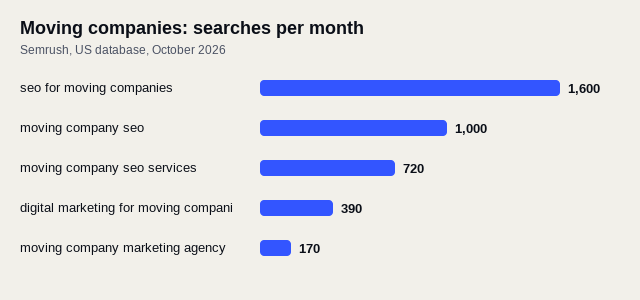
- The strongest phrase, “seo for moving companies”, gets about 1,600 searches a month in the United States.
- Reply to every enquiry within 1 business day, from the person who would do the work.
How People Look for a Moving company in the United States
Moving searches cluster around dates. People search weeks ahead for a quote, compare three or four companies and book fast. Local moves are priced by the hour and long-distance moves by weight and distance, and the buyer's questions about each are different. Trust is the sticking point because the customer hands over their belongings.
Moving sites often hide pricing logic. A page that explains how the quote is built, what affects the price and what is not included answers the question every customer is asking and earns both rankings and trust.
What the Search Data Says for Moving companies in the United States
| Phrase | Searches per month | Average CPC (USD) | Difficulty |
|---|---|---|---|
| seo for moving companies | 1,600 | $18.10 | 10 |
| moving company seo | 1,000 | $18.10 | 14 |
| moving company seo services | 720 | $18.10 | 23 |
| digital marketing for moving companies | 390 | not recorded | 17 |
| moving company marketing agency | 170 | $10.61 | 7 |
Source: Semrush Keyword Overview, US database, October 2026. Phrases with no volume reported are left out. CPC is shown in US dollars as Semrush reports it.
The strongest phrase in this set is “seo for moving companies” at 1,600 searches a month in the United States database. Click bids reach about $18.10 (USD, per Semrush), which tells you these enquiries carry real commercial value.
What We Would Fix First for a Moving company
Local, long-distance and packing pages
Each move type has its own page with how pricing works and what happens on the day.
Licensing and insurance proof
Operating authority and insurance details shown clearly so customers can verify them.
Quote form that qualifies
A form that asks for move date, size and addresses, so the team can quote accurately.
Reviews and route pages
Reviews from real moves and pages for the most common routes.
Movers that cross state lines need a USDOT number from the Federal Motor Carrier Safety Administration, and intrastate movers are regulated by state agencies. Showing the number lets customers verify you, which matters because moving fraud is a known problem. We build trust sections around those verifiable details.
Want this applied to your moving company?
Send the short form and get a review of your listing, your top pages and where AI assistants mention you.
Getting Named in AI Answers and Google AI Overviews
Questions like 'how much do movers cost' produce AI answers with price ranges and warnings about scams. A mover gets named when its pricing page explains the factors clearly, shows licensing and carries real reviews. We structure that page so the explanation is easy to quote.
On the technical side, the page and the listing should agree on the business name, address, hours and services, and the page should carry MovingCompany structured data that matches what is visible. Google documents the local business properties in its Search Central guide, and the profile rules in its Business Profile guidelines. No one controls whether an assistant names you, and nobody honest promises it. What we do is make you easy to find, verify and quote.
Rules and Trust Signals to Check
FMCSA/USDOT number for interstate moves. Rules change and differ by region, so confirm the current version with your regulator or adviser before publishing. We are a marketing consultancy, not a legal adviser, and we write around what you tell us your rules allow.
Your First 30 Days
- Quote funnel review. We check how many website quotes turn into booked moves.
- Route and move-type map. We choose the routes and move types to build first.
- Trust and form fixes. Licensing display and the quote form go first.
- Review call. We walk through what we found and what we would do first. You decide whether to go ahead. See our plan options for how engagements are scoped.
How We Measure It, and Who It Does Not Suit
What we report on: Quote requests, booked moves and the share lost to price. Rankings are tracked too, but they are not the goal. The SEO, AIO and GEO work behind it is described on those pages, and CRO comes in only when traffic exists and enquiries do not follow.
It does not suit you if: You cannot show operating authority and insurance, which customers will check. We would rather say so now than after a retainer starts, and we do not show client logos, ratings or results on this page because we have no published results for this niche to show.
FAQ
Moving companies SEO in the United States, answered directly
Should movers publish prices?
Publishing ranges and explaining what moves them builds trust. Exact quotes still come after an estimate.
How do we stand out from lead-generation sites?
By ranking for your own brand and routes, and showing verifiable licensing that lead sites cannot.
Does the moving season affect SEO?
Yes. Demand peaks in summer in many markets, so pages need to be ready in the spring.
Which service should I start with?
Most moving companies start with the map listing and the three pages closest to revenue, then add AI answer work once the basics are in place. The review tells you which order fits your site.
How we wrote this page
Chenthil Kumar wrote it from the search data and the sources listed below, and the Digimarketlabs Editorial Team checked it against our editorial guidelines. Volumes come from Semrush and were pulled in October 2026. Phrases below the tool's reporting floor are left out. Regulator details are starting points to verify, not legal advice.
Sources & further reading
Related pages